Showing posts with label equipment. Show all posts

Wednesday, September 2, 2015

Brew Day Video

At long last, I filmed shots of brewing an all-grain batch of a Honey Double IPA and strung the clips together into an 8-minute video on YouTube.  It illustrates all the steps involved in brewing a batch of beer from milling the grains through pitching the yeast.


The beer turned out great and the honey flavors really shined through.
Cheers!

Tuesday, August 11, 2015

Carboy and Keg Washer

We got a new piece of cleaning equipment and it works great.  It is the Mark II Keg and Carboy Washer and is basically a pump attached to a sprayer tube with a basin and stand.  I ran the primary fermentors from the Pale Ale through it with some hot water and Oxy Clean Free and was pleased with the results.  It still requires using a carboy brush for the caked on yeast from the krausen, but saves time and water and I am pleased with it.  There are some attachments that allow you to run cleaning solution through hoses as well that I will test out soon.

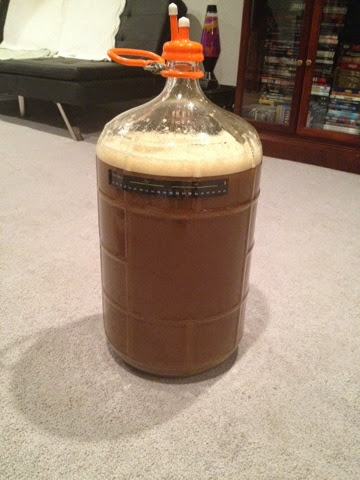
Here's a shot of the 10 gallon batch of Pale Ale with split Conan (Alchemist) and Pacman (Rogue) yeast in the secondary fermentors.
They both clocked in at 1.010 from 1.052, which will be 5.5% ABV.  I used 90.3% Rahr American 2-row base malt with 2.2% German Carared (24L), 3.2% American Caramel-10, and 4.3% American Carapils malts.  The hops are a "clean out the freezer" method with some Apollo, Centennial, Citra, Simcoe, Pine Fruit, Jarrylo, and Columbus.

I will dry hop these for a week and get them into kegs once we kick the leftover Rye Pale Ale from our field party.

Cheers!

Wednesday, August 5, 2015

Kegerator 2.0

Our newest project is to keg more beer!  I have a new Blichmann Beer Gun that I need to get in the practice of using.  In upgrading the kegerator, I am going to move the CO2 tank and regulator to the outside of the refrigerator, drill a hole for the air tube line, silicone seal around it, affix the gas distributor to the inside of the fridge where it will be easy to access, and have extra room for a fourth keg to condition or possibly a carboy to cold crash on the inside.  I will also shorten the extra gas tubing as it typically gets all tangled up and confusing for what goes where.  It will also be a good opportunity to clean the beer lines and faucets as well.

One recent issue I have been having is hop debris from dry-hopping clogging the dip tube and post, causing a blockage in the flow.  To combat that, I thought of cutting the dip tube, but decided to test out just bending the tube so it is not touching the bottom of the keg.  So far, so good on that experiment as I rescued a half-full keg of Rye Pale Ale leftover from our last big party.  We carefully transferred an IPA and an Amber Ale into kegs and they are awaiting a place in the newly configured beer fridge.
http://www.beveragefactory.com/images/KM5G-RBT-top101714111655.jpg

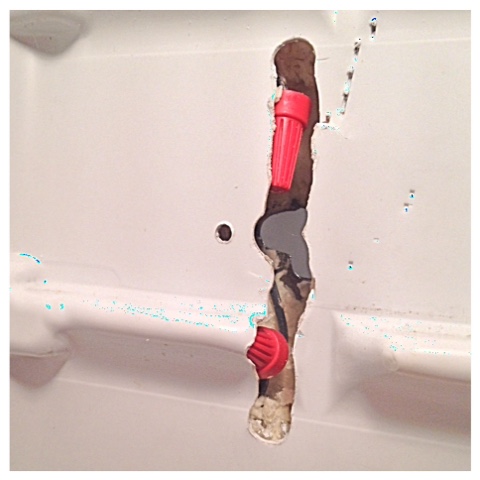
Note: Accidentally drilling through the electric line and having to splice a copper line makes this project a lot more difficult!
Tank on the outside:

Kegs on the inside:

Snake in the yard:
Cheers!

Saturday, March 7, 2015

Fat Ninja Ale Big Brew Day

Saturday was 65 degrees, perfect for a Pale Ale 10g batch. We used up the Maris Otter and used Pale US Malt, Munich, Biscuit, and Wheat malts. It came out at 1.052.

Experimental hop schedule with Simcoe, Centennial, Amarillo, & Palisade in the boil at 7,6,5,4,3,2,1...

Grains pre-mill:

Draining mash to kettle:

Boil in progress, lots of green hops:
Racking to two carboy fermentors;

Pitched yeast and set blowoffs:

One is California Ale yeast and one is English Ale yeast, both from White Labs.

Monday, February 9, 2015

Oatmeal Stout Bottling Day

The Oatmeal Stout came out to 55 bottles worth. Bottling stouts is remarkably easier than dry-hopped IPAs due to the sludge called trub.

First, we racked sanitizer to the bottling bucket:


Then racked the sanitizer back into carboy:


Now the beer was transferred from the carboy to the bucket with some Dixie Crystal simple syrup. The Hydrometer reading was 1.018 from 1.058.


Add the bottling wand and fill some bottles:


Crown and crimp:


This will be a good batch. It smelled and tasted Choco- roasty. Cheers!

Monday, January 5, 2015

Double Batch Brew Day

Saturday was a long day of brewing. We made a Northern English Brown and a Rye IPA

The Northern English Brown had Maris Otter Malt, Vienna, Special Roast, Biscuit, Crystal 75, & Pale Chocolate Malt.  The Rye IPA was Rahr American 2-Row, Rye Malt, Wheat, Carapils, and Carastan (C-35).  The English Brown started at 1.052 and I used California Ale yeast from White Labs.  The IPA started at 1.064 and I used Nottingham yeast from Danstar.

While the Brown Ale was boiling, we milled the grains and started the mash for the IPA.


Brown Ale transfer into the carboy:


Eagle-eye view of the IPA going into the carboy:


Cheers!

Tuesday, December 30, 2014

Brew Zone Lighting Project

We installed 48 feet of exterior illumination on the brew patio and it looks great!

This is the new exterior weatherproof GFCI outlet, which was not too difficult after all tapping from an interior gang box.


Rope lighting hung on cup hook screws


Time for a homebrew!

Saturday, December 20, 2014

Classic Ale Brew Day

American Amber Ale

Pale Malt as the base
Caramunich for sweetness/maltiness 
Melanoidin for maltiness 
Chocolate as a pinch for color/flavor

Warrior, Simcoe, Citra, & Amarillo hops 
pine, citrus, tropical fruit, orange, etc.

Mashed at 154


Heating sparge water
Next we lauter to the kettle


Going with a single batch sparge
Sparge water a little hot, mash to 175
Vorlauft and drained


spent grains


Bringing it to a boil


Warrior addition made
Next is 45 minutes of boil


Flameout, Chilled, Racked to Carboy fermentor, & Aerated


Helper Cat Arlo


Original Gravity is 1.061


Pitched yeast & added blowoff tube just in case.  Fermentation will begin shortly!


Thursday, November 27, 2014

Turkey & Beer

Happy Thanksgiving!  The Blichman was on double duty today...

Two ounces of Simcoe leaf hops:


This was 50 mins into boil:

After the brewing was complete, we fried a Turkey!  It was a 14 pounder, which took 48 minutes.  It was delicious!


Sunday, November 16, 2014

Ginger Ale

After having tried some great homemade Ginger Ale at Fulton Brewing in Minneapolis, MN, we decided we would like to have some on tap.  Today was batch #3 as we continue to toy with the ratios of the four ingredients:
  • Sugar
  • Ginger
  • Lemons
  • Water
 The process is fairly simple:
  1. Heat 5 gallons of water to 180 (minus about 16 ounces for the juice)
  2. Stir in sugar
  3. Stir in juiced lemons and ginger
  4. Steep for 60 minutes
  5. Cool in ice bath
  6. Rack to keg
  7. Refrigerate and carbonate


Tuesday, October 28, 2014

Extra Special Bitter Brew Day

We brewed an English Pale Ale (aka ESB) today using White Labs 005 English Ale yeast.  The color looks great and we can't wait to try the finished product.

This is the kettle with the chiller and auto-siphon after racking was complete.


The color looks very caramel/toffee:


We are looking forward to this one!

Saturday, October 4, 2014

Rye Pale Ale Brew Day

Today was the brew day for a Pale Ale with Rye, inspired by Spike Buckowski at Terrapin.  I am happy with my current process and wanted to photo document the many steps involved during Brew Day.

Heating the strike water is always first.  We always get that going early while working on the recipe formulation, gathering ingredients, and other things.


Next is milling the grains.  We usually do this during the 30 minutes the strike water is heating up to the calculated temperature ranging from 165 to 170.  Once the water is at temperature, we pour the hot water into the mash tun, add the grains, stir with the mash paddle, and establish the mash temperature.


Mashing.  This is an hour long process, so you will have some time to take care of a few other chores.  About 30 minutes in, we light the burner to get the sparge water heated to 170-180F.


Vorlauft and Lauter First Runnings.  After the hour is up, we run some wort off the mash tun into a pitcher, which helps catch some grain husks and proteins.  I pour that back into the tun using a colander strainer, then attach tubing to the mash tun ball valve, then transfer (lauter) all the wort into the boil kettle.

Vorlauft and Lauter the Second (and possibly Third) Runnings.
This is a repeat of the first lauter, but first adding either half or all of the sparge water.  I will do a single batch sparge if I have a big grain bill and a double batch sparge if I have a small grain bill.  Pour in the water, stir it like you mean it, vorlauft, and let it ride.

During this transfer, I light the burner to start heating the wort up to 212F.


Dispose of Spent Grains.  They did their job with the enzymes from the grain converting the starches into fermentable and unfermentable sugars during the mash.  Now, I clean the mash tun and usually spread the grains out in the yard somewhere.


Clean out the Mash Tun.  This picture shows the new plumbing with the false bottom, which is easy to remove and clean.  This is a 10 gallon cooler, which I maxed out with about 23 pounds of grain once and ended up being a pain.  If I do more 10 gallon batches, I will either need to double mash or find a larger or second mash tun.


Boil Away.  This is the fun part!


Add Boil Additions.  Hops, Whirlfloc, Irish Moss, etc.
It's 5:30, how bout some Fuggles!


Sanitize Wort chiller by placing it in the boil with 15 minutes left.  Add some Gypsum, irish moss, whilfloc, & East Kent Goldings hops.


Lots of steam on this 60F degree day!


After the hour-long boil was up, we extinguished the burner and turned on the hose for the wort chiller.

The mash tun got a bath in our wheelbarrow/outdoor sink.  We collect the water from the chiller and use it to pre-wash the equipment.


Here's a shot of the wort transfer from kettle to carboy fermenter.  Racking is the term for moving wort/beer, so you can insert many "nice rack" jokes!


The kettle gets a bath in the salvaged water as well.  Batches with lots of hops make this a messy endeavor.


Prior to pitching the yeast, the wort needs to be aerated well.  We will eventually get an O2 tank and diffusion stone to inject pure oxygen for the yeast, but now we shake, rattle, and roll it.


Now the wort is ready to be inoculated with Saccharomyces cerevisiae, which is the scientific name for brewers yeast.  We are using White Labs yeast today, which conveniently comes in a test tube-like container.


Usually, one to two days later, we will start seeing CO2 activity on the airlock and a krausen forming on the surface, which means the yeast are converting starch to ethanol and carbon dioxide.


Cheers!